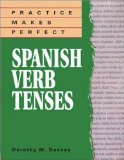
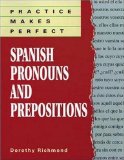
Practice Makes Perfect Series
Submitted by Nikki on
Topics:
- Read more about Practice Makes Perfect Series
- Log in to post comments

Books in Spanish, from Spanish writers, about hispanohablantes.
Submitted by Nikki on
Submitted by Nikki on
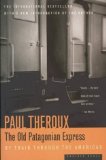
In his world travels, Paul Theroux has helped define the travel writing genre, including a book focused on travel to Central and South America in The Old Patagonia Express. The book tells the story of his 1970s journey from Boston through Latin America and ending up in Patagonia. He chooses rail travel for its slow nature and for the chance to see the countryside and how people who used the train lived, preferable to instantaneous air travel that moves you between two different spaces with no time to process or experience the transition.
Submitted by Nikki on
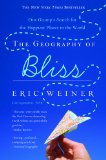
The Geography of Bliss tells former NPR correspondent Eric Weiner's tale searching for the happiest places in the world. In his year-long project, his visits include Iceland (one of the happiest places in the world), India (a world of contradictions with relatively high levels of happiness), the Netherlands (where he finds tolerance and the Center for Happiness Studies), Bhutan (a small Himalayan nation striving towards Gross National Happiness) and Moldova (one of the world's unhappiest places). In each place, he strives to understand the factors and cultural aspects leading to the country's high level (or low level in Moldova's case) of happiness.
Submitted by Nikki on
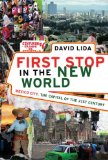
David Lida's First Stop in the New World is a wonderfully-written look at modern Mexico City, a city he loves not in spite of its paradoxes but because of them. Having lived as an ex-pat in DF since 1990, Lida provides great insight into the culture and its idiosyncrasies from a somewhat outsider's perspective. It's clear that Lida is a journalist always looking for an interesting angle from which to explore the great city, providing tidbits that are unique to DF.
Submitted by Nikki on
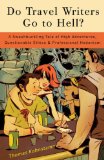
While traveling a few years ago in Central America, it seems every other gringo had their nose tucked into the thick green-covered travel bible, also know at Lonely Planet's Central America on a Shoestring. Travelers often ended up at the same hotels, same restaurants, and going to the same recommended cities in a vicious gringo circle of travel bliss. The off-the-beaten-path fame the guidebook once had is now the dominant guidebook for independent travelers, limiting the spectrum of the travel experience. Although I used to strictly stick to guidebook recommendations, I learned the hard way that their information was often out of date or completely wrong.
Submitted by Nikki on
For both kids and adults learning Spanish, children's books are a great way to practice reading in Spanish. While many language-learners get frustrated with texts that are beyond their ability, kid's books offer a colorful, enjoyable way to improve your Spanish reading skill. The books recommended below are translations of books you have either read or been read to as a child. I recommend practicing reading aloud to improve your pronunciation.
Buenas Noches Luna (Goodnight Moon)
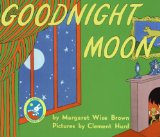
Submitted by Nikki on
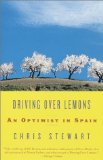
Several years back I purchased this book before heading to Andalucia, one of my favorite regions of Spain. The memoir is clever, and really captures the feeling of Andalucia, with its dry hilly terrain, lemon and olive trees, and tranquilo people.
Submitted by Nikki on
Submitted by Nikki on
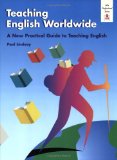
This teaching manual by Paul Lindsay is a wonderful resource not only for people interested in teaching English worldwide, but also people teaching in the US. It's an easy to read step-by-step guide for new language teachers, but I imagine it could be useful for seasoned teachers as well. The content of most Teaching English as a Foreign Language (TEFL) courses is covered in this book. So many language books are overly theoretical and academic while Teaching English Worldwide is extremely practical in teaching how to be a language teacher.
Submitted by Nikki on
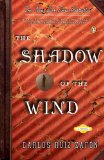
Another book about people who love books, like The House of Paper, The Shadow of the Wind combines mystery and intrigue against an interesting historic backdrop in this bestselling Spanish novel by Carlos Ruiz Zafón.
